
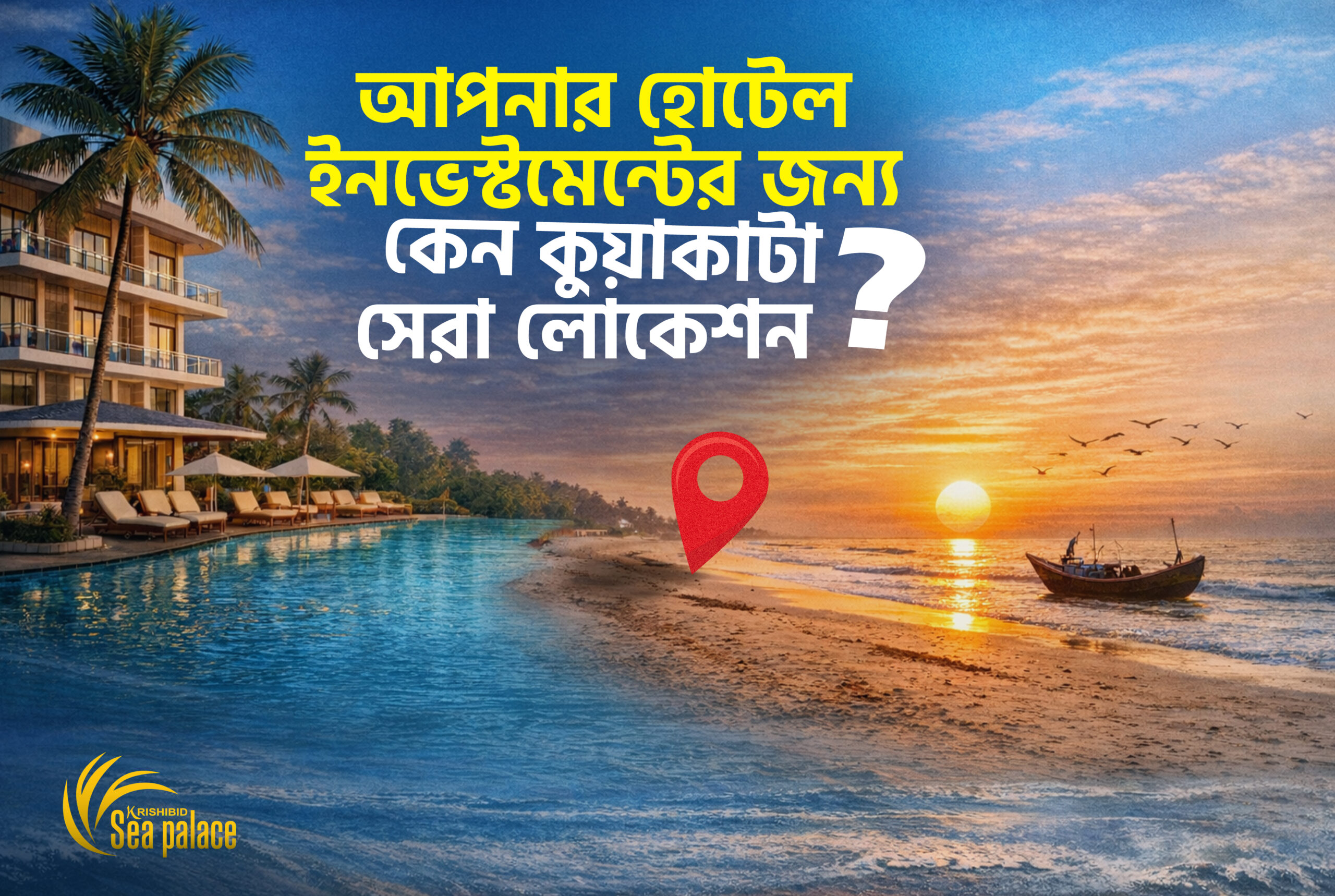
First, let’s talk about the land itself. People call Kuakata the “Sagor Kannya” or the Daughter of the Sea. Now, Bangladesh has other beaches—Cox’s Bazar is the most famous, of course—but Kuakata has something that literally nowhere else in the country can offer.
The Sunrise and Sunset Miracle
In most places in the world, you have to go to one beach to see the sun rise and another to see it set. In Kuakata, you can stand in one spot and watch the sun emerge from the Bay of Bengal in the morning and dip back into the same sea in the evening.
Why this makes you money: From a business perspective, this is a “Unique Selling Point” (USP). Tourists don’t just come for an hour; they stay to catch both events. This naturally pushes up the demand for overnight stays. If a hotel has a balcony facing the right way—like the ones at Krishibid Sea Palace—that room becomes a premium product that people will pay extra for.
The Virgin Beach Atmosphere
While Cox’s Bazar has become very crowded and “concrete-heavy,” Kuakata still feels fresh and natural. It has an 18km long beach lined with coconut trees and nearby mangrove forests like Fatrar Chor (part of the Sundarbans). For the modern traveler who wants “eco-tourism” and peace, Kuakata is the new gold standard.
The Game Changer: Infrastructure and Connectivity
For years, Kuakata was a “sleeping giant.” It was hard to get to, which kept the crowds away. But everything changed with the Padma Bridge.
Driving Instead of Waiting
Before the bridge, you had to wait hours for ferries. It was exhausting. Now, the trip from Dhaka to Kuakata is a smooth 5 to 6-hour drive.
The Weekend Revolution: Because it’s so close now, Kuakata has become a “weekend destination.” Families in Dhaka can decide on a Thursday night to visit, drive down Friday morning, and be back for work on Sunday. This has created a massive surge in “domestic tourism”—regular Bangladeshis spending their local currency right here at home.
The Payra Bridge: Along with the Padma Bridge, the Lebukhali (Payra) Bridge has removed the last major bottleneck. The road is wide, the journey is scenic, and the tourists are pouring in.
More Than Just Tourism: The “Blue Economy”
This is the part many people miss. Investing in a Kuakata hotel isn’t just about people on vacation. It’s about the massive industrial shift happening in the South.
The Payra Sea Port and Power Plants
Right next door to the tourist zone is the Payra Deep Sea Port and several massive coal and LNG power plants. This is the industrial heart of the new Bangladesh.
Corporate Guests: Thousands of engineers, foreign consultants, and government officials are working on these projects. They don’t want to stay in a cheap motel; they need 5-star facilities, high-speed internet, and conference rooms.
Year-Round Income: Tourists usually come in the winter. But business travelers come all year round. By owning a share in a high-end hotel, you are tapping into a steady stream of corporate income that doesn’t care about the weather.
Why “Hotel Shares” Are the Easiest Way to Invest
A lot of people think, “I should buy a piece of land in Kuakata.” That sounds good on paper, but have you ever tried to manage a plot of land from 300 miles away?
You have to worry about people trespassing.
You have to deal with complicated paperwork.
You have to find a buyer later, which can take months or years.
The “Passive Income” Model
Investing in a project like Krishibid Sea Palace is different. You aren’t just buying “bricks”; you are buying a revenue-generating asset.
Professional Management: A professional team handles the guests, the cleaning, and the marketing. You don’t have to worry about a leaky pipe or a lightbulb.
Halal Income: For many, this is a huge plus. The profit comes from genuine business—renting out rooms and selling food—making it a clean, “halal” way to grow your wealth.
Ownership Perks: Usually, when you buy a share, you get “free nights” every year. So, not only is the hotel making you money, but you also have a free luxury vacation home for your family whenever you want to visit.
The “First Mover” Advantage
Timing is everything in real estate. If you look at the price of land in Cox’s Bazar today, it’s incredibly expensive. Most regular people have already “missed the boat” there.
Kuakata is currently in its “Sweet Spot.” The big bridges are open, the port is working, but the land prices haven’t hit their peak yet.
Capital Appreciation: This is a fancy way of saying your share will be worth more tomorrow than it is today. As the area develops and more 5-star hotels go up, the value of the early projects skyrockets.
Steady Dividends: While the value of your share goes up, you are also getting a “cut” of the hotel’s profits every year. It’s like having a fruit tree—the tree gets bigger (value increases), and you get to eat the fruit (dividends) every season.
Safety and Trust: The Krishibid Group Factor
Whenever you invest, the most important question is: “Who am I giving my money to?” The Krishibid Group is a household name in Bangladesh. They have a massive track record in agriculture, real estate, and food. When a trusted name builds a “Sea Palace,” they aren’t just building a hotel; they are protecting their reputation. This gives you a level of security that you just don’t get with small, unknown developers.
A Socially Responsible Move
By investing here, you are also helping the local community. These hotels create thousands of jobs for local youth—from chefs to tour guides. You are helping turn a once-isolated region into a modern hub of opportunity.
Summary: The Four Pillars of Kuakata Investment
To wrap it up, here is why your money belongs in a Kuakata hotel share:
Nature: It’s the only place for both sunrise and sunset.
Access: The Padma Bridge made it a 6-hour trip from the capital.
Business: The Payra Port ensures corporate guests all year long.
Growth: You are buying in while the prices are still “early-stage” compared to Cox’s Bazar.
Investing isn’t just about numbers; it’s about seeing where the world is going before everyone else gets there. Right now, the world is going to Kuakata.